If you've noticed doors sticking, uneven floors, or cracks appearing in your Tyler home, you're not alone—and you're right to be concerned. Many homeowners ask us, "how do I know if I need crack repair?" The answer lies in understanding what these warning signs mean. These seemingly minor annoyances are often the first visible signs that something much larger is happening beneath your house. In Tyler, where expansive clay soils expand and contract dramatically with our wet and dry seasons, foundation cracks and related issues are among the most common complaints we hear from homeowners. Understanding what these symptoms mean can help you catch problems early, before they become expensive disasters.
Many Tyler homeowners dismiss a sticky door or a small crack as quirks of an older home. But these are warning signals your foundation is sending you. As local experts with years of experience in East Texas soil conditions, we've seen how quickly minor symptoms can escalate when left unaddressed. If you're experiencing these issues, professional Foundation Repair in Tyler, TX could save you thousands in future repairs.
How Do I Know If I Need Crack Repair? Key Signs and Criteria
Determining whether you need professional crack repair depends on several factors. Not every crack signals disaster, but knowing which ones demand attention can save you from costly structural damage. Here's how to evaluate cracks in your Tyler home:
Crack Width Matters: Hairline cracks less than 1/16 inch wide are often cosmetic and result from normal settling. However, cracks wider than 1/4 inch indicate significant foundation movement and require immediate professional evaluation. If you can fit a quarter into the crack, it's time to call an expert.
Crack Direction Tells a Story: Horizontal cracks in basement walls or concrete block foundations are the most serious—they indicate lateral pressure from soil pushing against your foundation. Diagonal cracks running from corners of windows and doors suggest differential settling. Vertical cracks are generally less concerning but should still be monitored.
Growing or Recurring Cracks: Mark the ends of cracks with tape and date them. If cracks continue extending or widening over weeks or months, you need crack repair. Cracks that keep returning after cosmetic patching indicate ongoing foundation movement.
Location Considerations: Cracks where walls meet ceilings, stair-step cracks in brick exteriors, and cracks accompanied by water intrusion all signal foundation problems requiring professional crack repair. Multiple cracks appearing simultaneously throughout your home are especially concerning.
Accompanying Symptoms: When cracks appear alongside sticking doors, uneven floors, or gaps around windows, the evidence points clearly to foundation issues. These combined symptoms answer the question of how do I know if I need crack repair—you do.
Do Sticking Doors Mean Foundation Problems?
The short answer is yes—sticking doors are one of the most reliable early indicators of foundation movement and often accompany cracks that need repair. When your foundation shifts, settles, or heaves, it causes the door frames throughout your home to move out of square. A door frame that was once perfectly rectangular becomes slightly parallelogram-shaped, making the door bind against the frame.
In Tyler, this problem is particularly common due to our expansive clay soil. During dry periods—especially our extreme summer heat—the clay shrinks dramatically, causing the foundation to settle unevenly. When heavy rains return, the soil expands again, but rarely in the same pattern. This constant shrink-swell cycle puts tremendous stress on your foundation.
Not every sticking door indicates foundation damage. Humidity changes can cause wood doors to swell temporarily, and old hinges can sag. However, if multiple doors throughout your home are sticking, or if the problem persists regardless of weather, foundation movement is the likely culprit. According to Foundation Repair Association guidelines, multiple sticky doors combined with other symptoms should prompt a professional evaluation.
How Can You Identify Foundation Problems From Interior Symptoms?
While sticking doors and visible cracks are clear warning signs, they're rarely the only symptom of foundation trouble. Tyler homeowners wondering how do I know if I need crack repair should look for these additional indicators:
Uneven or Sloping Floors: Place a level on your floor in several rooms, or simply set a round object down and watch if it rolls. Floors that slope more than one inch over fifteen feet indicate significant foundation movement.
Cracks in Drywall: Look for diagonal cracks emanating from door and window corners. These occur because the wall framing is twisting as the foundation moves. Horizontal cracks along the ceiling line or stair-step cracks are also concerning and often indicate you need crack repair.
Gaps Around Windows and Doors: Foundation settlement can cause gaps to appear between window frames and the wall, or between the door frame and the surrounding drywall. You might also notice daylight coming through where there shouldn't be any.
Cabinets Pulling Away From Walls: In kitchens and bathrooms, watch for cabinets that no longer sit flush against the wall, or countertops that have developed gaps at the backsplash.
Cracked Floor Tiles: Ceramic or porcelain tiles are brittle and can't flex with foundation movement. Cracked tiles, especially in a pattern across the room, suggest the concrete slab beneath is shifting.
How Does Professional Foundation Crack Repair and Leveling Work?
When foundation problems are confirmed, professional Foundation Leveling in Tyler combined with crack repair is the most effective solution. Understanding the process helps homeowners know what to expect and why professional intervention is superior to DIY attempts.
Step 1: Comprehensive Assessment
A qualified technician surveys your entire home using precision instruments to map exactly how the foundation has moved. This includes measuring floor elevations, documenting crack patterns, and often inspecting the perimeter and crawl space areas.
Step 2: Soil Analysis
In Tyler, understanding the specific soil conditions beneath your home is crucial. The expansive clay common in Smith County behaves differently than sandy soils, requiring tailored solutions.
Step 3: Pier Installation
Most foundation leveling projects involve installing steel piers that extend down through unstable soil to reach load-bearing strata. These piers transfer your home's weight to stable ground, regardless of surface soil moisture conditions.
Step 4: Lifting and Leveling
Using hydraulic equipment, technicians carefully lift the foundation back toward its original position. This process is done incrementally to avoid damaging the structure while achieving maximum correction.
Step 5: Monitoring and Warranty
After leveling, responsible contractors monitor the results and provide warranty protection. Quality foundation work in Tyler should include long-term performance guarantees.
Foundation Crack Repair vs DIY: What Tyler Homeowners Need to Know
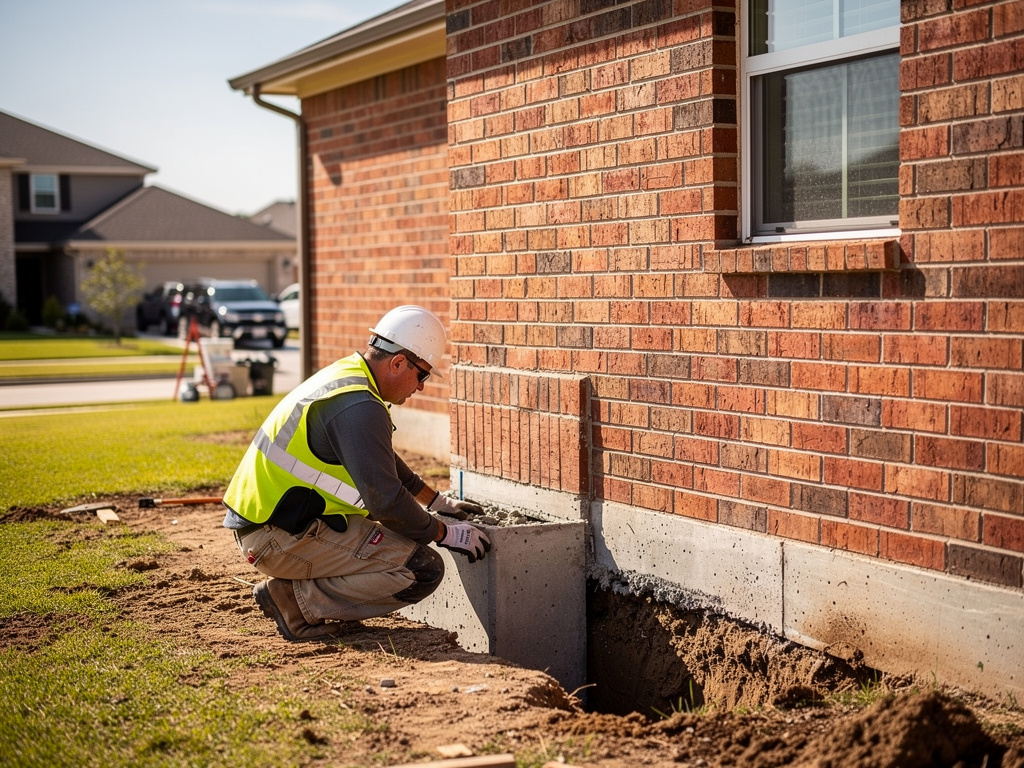
We understand the temptation to tackle home repairs yourself—it's cost-effective and satisfying. However, foundation crack repair and leveling is one area where DIY approaches consistently fail to deliver lasting results.
Some homeowners attempt to address sticking doors by simply planing down the door edge or adjusting hinges. While this might temporarily solve the symptom, the underlying foundation problem continues worsening. Others try foam injection kits marketed as crack repair solutions. These consumer-grade products cannot generate the lifting force needed for actual foundation leveling and may create additional problems by trapping moisture.
Professional foundation repair requires specialized equipment that costs tens of thousands of dollars, engineering knowledge to avoid structural damage during lifting, and experience reading how different soil types and foundation styles respond to correction. The stakes are simply too high—improper lifting can crack slabs, rupture plumbing, or cause walls to separate from ceilings.
Perhaps most importantly, professional repairs come with warranties. If a DIY attempt fails—and it likely will—you've spent money and time only to need professional work anyway, often at higher cost because the amateur work must be corrected first.
How Long Does Foundation Crack Repair Take?
Tyler homeowners are often surprised by how efficiently professional foundation crack repair and leveling proceeds. Most residential projects complete in one to three days, depending on the home's size and the severity of the problem.
A typical single-story home with moderate settling might require eight to twelve piers installed around the perimeter. An experienced crew can install these piers and complete the lifting process in approximately two days. Larger homes or those with severe damage may take three to five days.
Unlike many major home repairs, foundation work rarely requires you to vacate your home. The work happens primarily outside, with interior access needed only for monitoring and final adjustments. Most homeowners continue their normal routines while work progresses.
After completion, some cosmetic repairs will be needed—refinishing drywall cracks, repainting affected areas, and possibly replacing damaged flooring. These secondary repairs can often wait until you're certain the foundation has stabilized, usually a few weeks after leveling.
Why Choose a Local Foundation Repair Expert in Tyler
Tyler's unique soil conditions demand specialized local knowledge. National chains and out-of-town contractors may understand foundation repair in general, but they often lack experience with the specific challenges our expansive clay presents.
Local experts understand that Tyler foundations face drought-driven soil shrinkage during our long, hot summers and rapid expansion when fall rains arrive. We know which neighborhoods were built on cut-and-fill lots, where drainage problems are most common, and how different construction eras used different foundation techniques.
This regional expertise translates directly to better outcomes. A contractor unfamiliar with Tyler's soil might recommend a solution that works perfectly in sandy coastal areas but fails within years here. Local professionals also maintain relationships with area engineers, permitting offices, and real estate professionals—connections that can prove valuable if you're selling your home or need documentation for insurance purposes.
Choosing local also means accountability. A Tyler-based company has a reputation to maintain in this community. We see our customers at local restaurants, youth sports events, and neighborhood gatherings. That personal connection motivates exceptional service in ways distant corporate offices cannot replicate.
Frequently Asked Questions About Foundation Crack Repair in Tyler
How do I know if I need crack repair or just cosmetic patching?
If cracks are wider than 1/4 inch, growing over time, or accompanied by sticking doors and uneven floors, you need professional crack repair—not just cosmetic fixes. Horizontal cracks and stair-